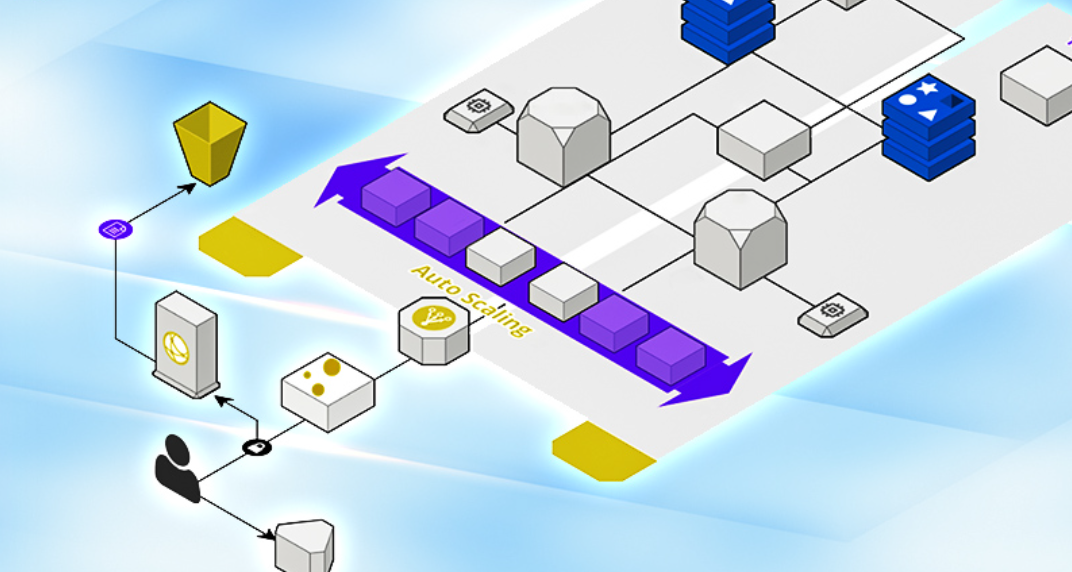
Cloud bursting and auto scaling address dynamic resource needs but from different angles. Bursting uses on-demand public clouds to absorb peak workloads while core operations stay on private infrastructure, emphasizing portability, data residency, and governance. Auto scaling adjusts compute resources in real time through policy-driven triggers to balance cost and performance. The two form a pragmatic hybrid: bursting provides overflow capacity, while auto scaling tunes granularity and responsiveness. The choice hinges on control, latency, and total cost, with surprises possible beyond initial assumptions.
What Cloud Bursting Is and When It Fits
Cloud bursting is a deployment approach that leverages on-demand public cloud resources to handle peak workloads while maintaining primary operations in a private or on-premises environment. It enables flexible scaling amid bursting scenarios, but raises security implications, portability challenges, and compliance considerations. Strategic evaluation identifies workload portability as critical, guiding choices about data residency, access controls, and ongoing risk management for freedom-oriented architectures.
How Auto Scaling Works and When It Fits
Auto scaling is a dynamic, policy-driven mechanism that automatically adjusts compute resources in response to real-time demand, aligning capacity with workload intensity while controlling cost and performance. It operates around scaling triggers, evaluating thresholds for CPU, memory, and I/O to add or remove instances.
Workload granularity determines responsiveness, balancing rapid adaptation with stability and predictable service levels. Freedom rests in calibrated automation.
Comparing Costs, Latency, and Control
The comparison of costs, latency, and control begins from the practical trade-offs exposed by auto scaling. In strategic terms, bursting can reduce capex but introduces burst latency and unpredictable performance. Auto scaling offers price predictability through steady usage tiers, yet may lag under sudden demand. The analysis weighs flexibility against cost discipline, emphasizing transparent governance and operational clarity.
How to Choose Your Hybrid or Standalone Approach
Hybrid architectures demand a disciplined assessment of workloads, cost objectives, and risk tolerance to determine when a hybrid or standalone approach yields the most predictable value.
The decision hinges on a clear burst strategy and latency considerations, balancing agility with control.
A pragmatic, strategic framework weighs migration effort, data gravity, and vendor ecosystems to preserve freedom while aligning reliability and cost targets.
Frequently Asked Questions
How Does Security Differ Between Cloud Bursting and Auto Scaling?
Security differences hinge on governance: cloud bursting often expands attack surfaces requiring stringent data governance and security models, while auto scaling emphasizes consistent policy enforcement. Strategically, each favors adaptable security models and disciplined data governance to preserve freedom and resilience.
What Governance Models Suit Hybrid Cloud Bursting?
Governance models for hybrid cloud bursting favor centralized policy control and federated accountability, enabling hybrid orchestration across clouds. Cloud governance emphasizes risk-aware decision making, while hybrid orchestration aligns provisioning, compliance, and cost management with freedom to innovate.
Can Burst Scaling Handle Stateful Workloads Effectively?
Like a tightrope walker, burst scaling struggles with stateful challenges and latency considerations, often failing to sustain continuity; strategic, analytical pragmatism suggests careful workload partitioning and robust state management to safeguard performance.
Which Tools Monitor and Alert Cross-Cloud Bursting?
Cross-cloud bursting monitoring is supported by tools like Datadog, Prometheus, and Splunk, which emit bursting monitoring metrics and trigger cross cloud alerts. They enable strategic, analytical, pragmatic visibility for freedom-seeking teams managing multi-cloud bursts.
How Do SLAS Vary Across Bursting and Auto Scaling Setups?
Bursting SLAs resemble a tightened fuse: flexible yet bounded, while auto scaling SLAs stay steadier with predictable limits. The analysis shows prioritizing burst budgets and observability, aligning bursting SLAs with risk tolerance and auto scaling SLAs with uptime guarantees.
Conclusion
A strategic hybrid approach leverages both bursting and auto scaling to balance peak demand with steady, predictable performance. Bursting extends capacity on demand, while auto scaling fine-tunes resources within defined boundaries, optimizing cost and resiliency. When choosing, consider data residency, governance, and latency requirements, alongside workload variability. Example: a retailer processes seasonal traffic spikes by auto scaling private clusters for baseline and bursting to a public cloud during peak promotions, then retracting to control costs post-sale. This blend delivers agility with governance.
